Life Modelling as part of (re)Discovering Life!

Today I spoke to Liz who modelled with us at Mortlake. It was her first time, and is as she describes part of a journey of transformation for her.

“I had never heard of life modelling before, until I met Morimda.” Morimda is our friend who 1st came up with the idea for Spirited Bodies. She started the 1st event with us in October 2010 then had to leave it in our hands due to personal commitments. Now she is ready to rejoin us as we prepare for a big event at Battersea Arts Centre with London Drawing for The Big Draw – http://www.bac.org.uk/whats-on/drawing-theatreOct2012/

Morimda explained to Liz how artists require life models in order to learn and practice drawing, and sometimes this is nude modelling. Liz was curious and Morimda advised her to get in touch with us and try it. Liz is a health care professional who has no background in art apart from some recent drama classes where she met Morimda which are part of a big change in her life. For some years, Liz, now 39 has not been happy in her job. It pays the bills but leaves a deep chasm unfulfilled in her. When she moved to the UK 4 years ago Liz was on a journey of self discovery. It started with acknowledging that she was not happy and this was in part due to the people around her – her friends. She felt they were generally only concerned with material things and knew they would not accept the new her who changed to part time to give herself time to discover new things.

Liz checked this blog and saw images of groups of people drawn by artists which attracted her, as well as reading their comments. At Mortlake she liked what she saw – a room full of artists who were very serious about their practise, as well as a big variety of models – different shapes, sizes and ages in particular. Seeing older people in the mix made her feel at ease and encouraged that this really was for all. She thought how brave the older models must be as she herself had been worried it would be full of very young people which was not the case.

She liked that this was an area of life she could engage with in a totally separate way from her job, which she feels is necessary as if her colleagues or boss knew she modelled nude even for artists they may judge her. She also enjoyed the professional atmosphere of silence and concentration which the models and artists work in. She understood that modelling is not ‘doing nothing’ but in fact actively being present for artists and being very conscious of how you pose. Where she had worried that artists may be perving on models she felt reassured as she understood now how artists get inspiration from models. To be present in the room with them and see their art work it all made sense.

Morimda had explained to Liz how artists look for light and shadow, curves and lines, and that if you draw yourself you may understand best what it is a model can give.

This piece will be continued. Here are some images from the recent event in Notting Hill Visual Arts Festival:

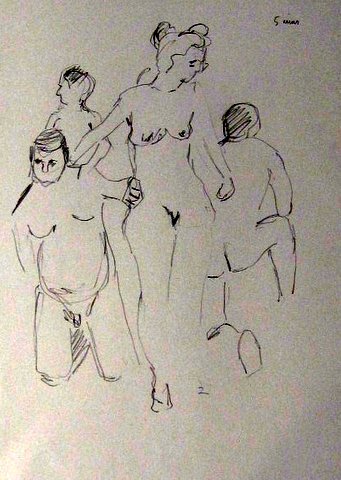
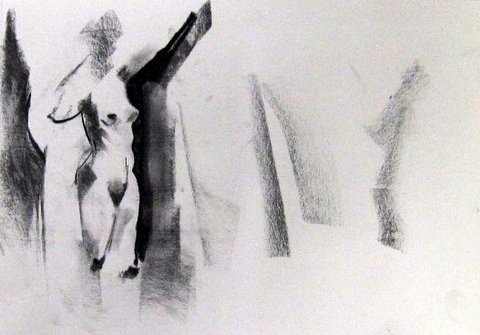
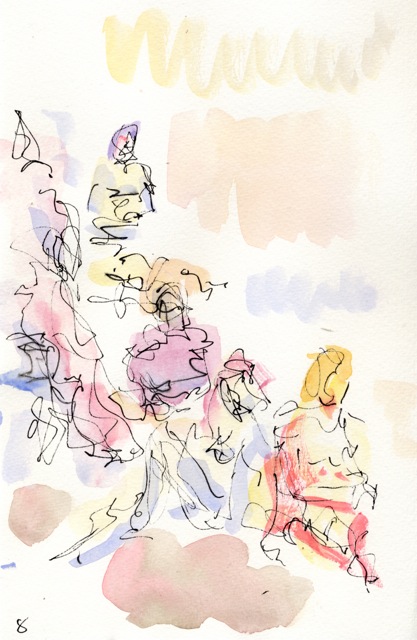
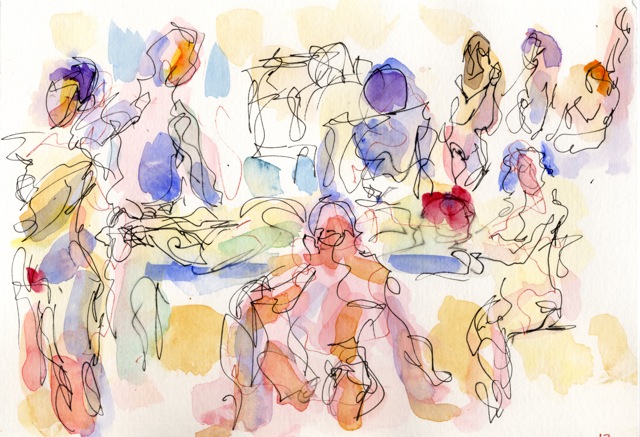
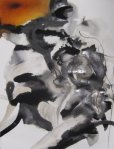
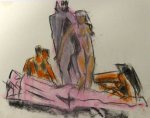
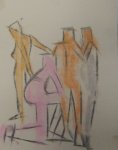
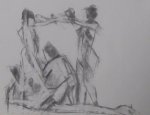
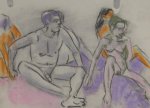
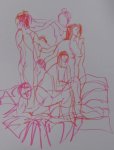
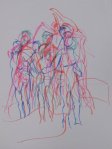
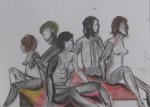
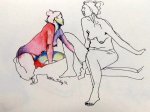
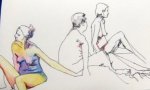
Francis Wardale’s Artwork from Mortlake

I enjoy life drawing but this gives me the chance to draw people in more complex 
compositions than you get in a life class.

This slideshow requires JavaScript.

I enjoy the challenge of trying to record the groupings of models with only a limited time. (Of course I make it difficult for myself by trying to include as many of the models as possible rather than on concentrating on individuals or small groupings, but for me that's the challenge - and I want to make the most of the opportunity offered) www.franciswardale.com

Thanks Tom, it was great to have you with us!

tomlifemodel's avatarTom - artist's model

I joined four other models at Spirited Bodies as part of the Notting Hill Visual Arts Festival for a life drawing session at the Flyover Space. Spirited Bodies runs life drawing sessions aimed at giving new models the confidence to allow “their light to shine” and work with more experienced models in a group setting. Esther, who founded the group, modelled with us and her fellow founder Lucy helped to direct proceedings and took the photographs of the models and the artwork.

If you are artist who would like the opportunity to work from several models or an aspiring model I would recommend looking out for future Spirited Bodies events. See their website at the link below:
http://spiritedbodies.com

View original post

Pretty in Portobello

We really admired the artwork from this event

There is a lot more to follow. Truly, artists had a very free style in Ladbroke Grove and we salute that. Just 5 models finally made focus a little clearer, and me being one of them made working out poses with the group nice and easy.

A Few Tips For Life Models From Andre R, plus images by Rob Black

Andre took part in last Saturday’s multi-life modelling event in Mortlake and would like to share this advice which is particularly good for those new to life modelling;

  • It’s a good idea to stretch thoroughly before a posing session.  Calves, thighs, hamstrings, neck, back and shoulders are all vital.  This helps muscles from seizing up or going into unhelpful spasm.  My personal preference is to stretch at home and then again at the venue

On this point, it is probably ideal also to soak in a hot bath both before and after a posing session – but that’s not a very green thing to do!  Maybe a Jacuzzi at your gym is a good compromise!

  • Have only a light meal before a posing session
  • Take a dressing gown, towel (for wiping away perspiration), facial tissues and bottled water into the posing room with you – the core “kit” for any model to have handy
  • If you find you have to sit on chairs or cushions etc provided at the venue, it might be good “etiquette” to cover these with your own towel or dressing gown and sit on this
  • When posing for any period longer than 10 minutes, consider how your body weight is distributed onto pressure points onto your limbs.

Always aim to distribute weight and pressure onto feet, hands and joints as evenly as possible.  Be realistic about how long you can hold any pose that generates even the smallest seeming: pressure points, muscle tension, muscle stretch, muscle lock, joint strain or any feeling of holding or bearing weight – yet having to keep still

  • Never look directly at artists, it is unnatural and soon becomes uncomfortable for both artist and model.  Pick a point in the room – it might be a light switch, a spot on the wall, a bracket on a pipe, a red paint splotch on the back of an easel.  Point your nose at this spot.  If you ever have to move your head or return to a pose, you will always be able to return your head to a precise position again
  • Try not to have limbs doing anything symmetrical, have each leg or arm doing something different – it is more interesting for the artist(s)
  • One trick for being able to hold arms away from the body for long periods is to use a pole, but you still have to think about weight, stretching and pressure points and be realistic
  • There’s no harm in planning poses ahead of a session.  Maybe flick through life drawing tutorial books to get ideas for poses.  Steal ideas from other models! Always be realistic about what your own body can manage
  • Plan a “repertoire” of what you can achieve for the range of poses you might be asked to undertake: short dynamic poses (2mins to 5mins), mid-length poses (15-25mins) and long poses (30-45mins)
  • If you find you are in trouble in a pose (it can happen to even the most experienced) and decide  you must break the pose to stretch, unlock frozen muscles, deal with a building spasm etc, you can try warning the artist(s) that you are going to have to break the pose in 2 minutes’ time (or whatever)
  • When memorising your pose (so that you can return to it) the two key things to make a mental note of are head position (see above) and feet position (some people even have their feet position chalk marked on the floor). Arm positions just have to be memorised
  • The following is a personal view.  Posing nude for life drawing is not a naturist thing.  My belief about “etiquette” is that as soon as any break or session end is called, you should put on your dressing gown.  I once saw a male model walk around the room nude looking at what artists had drawn – don’t make such assumptions about what strangers are comfortable with.  Keep to the line that is drawn about why you are there to be nude.  As I say, just a personal view.
  • Always ensure tutors or hosts are going to both time poses strictly and call out time remaining during any poses of 10 minutes and above.  Most mobile phones have stop watches these days! Models can lose all sense of time, even in a 15 minute pose.  It helps both models and artists to have someone call out “10 minutes left” “halfway through”, “5 minutes left” etc.  This is so incredibly helpful that you must always ensure it is going to be done

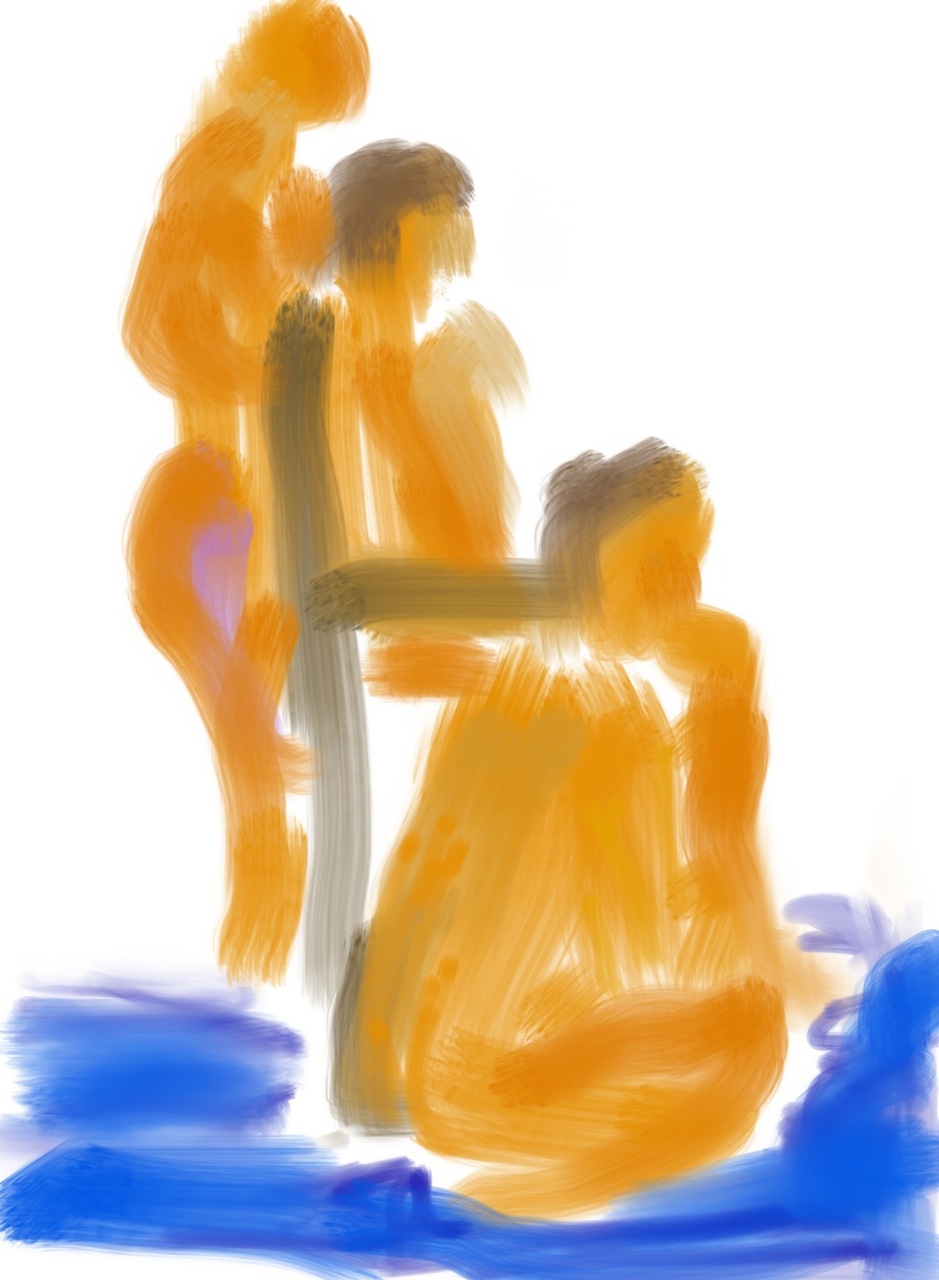
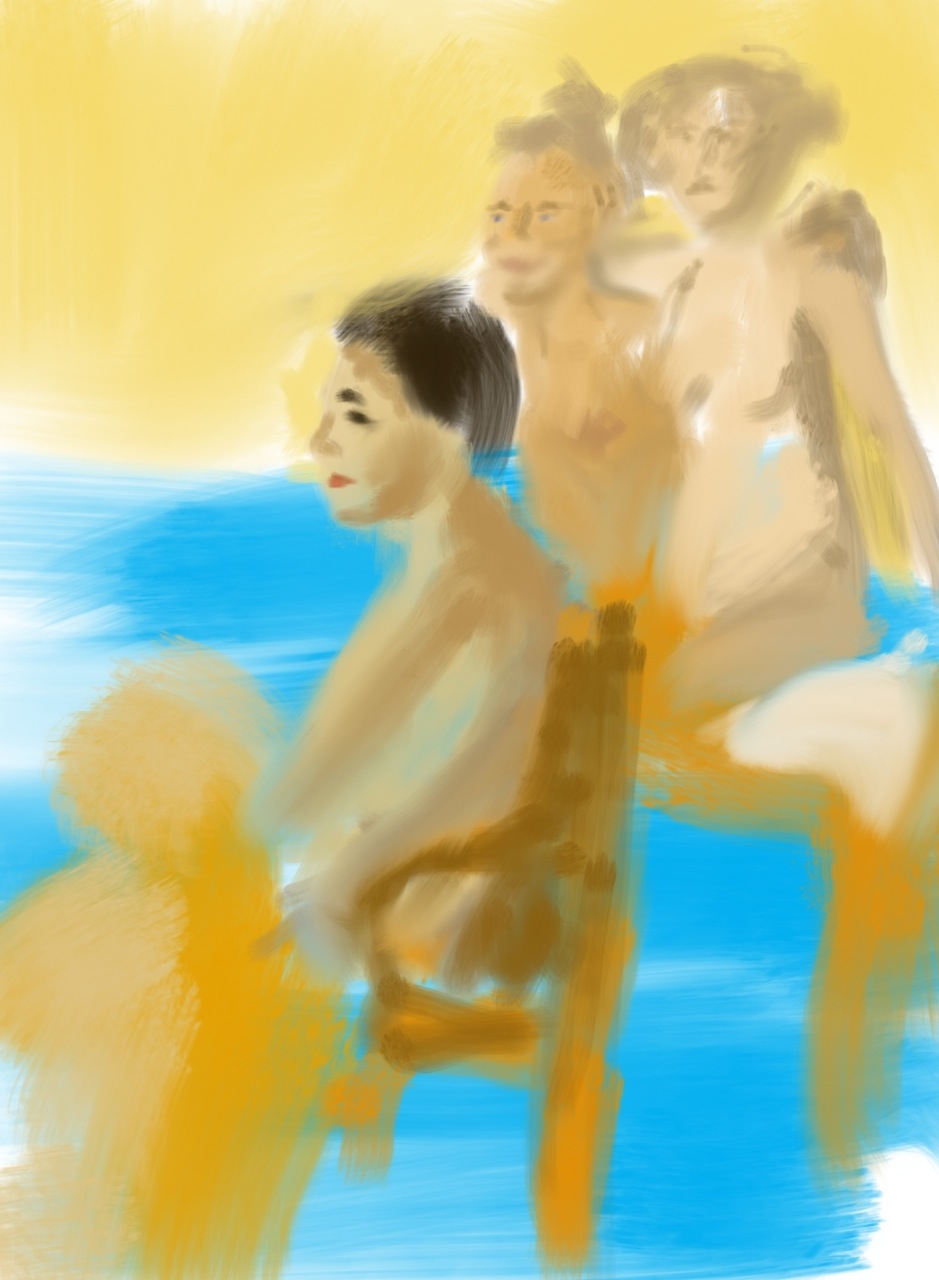
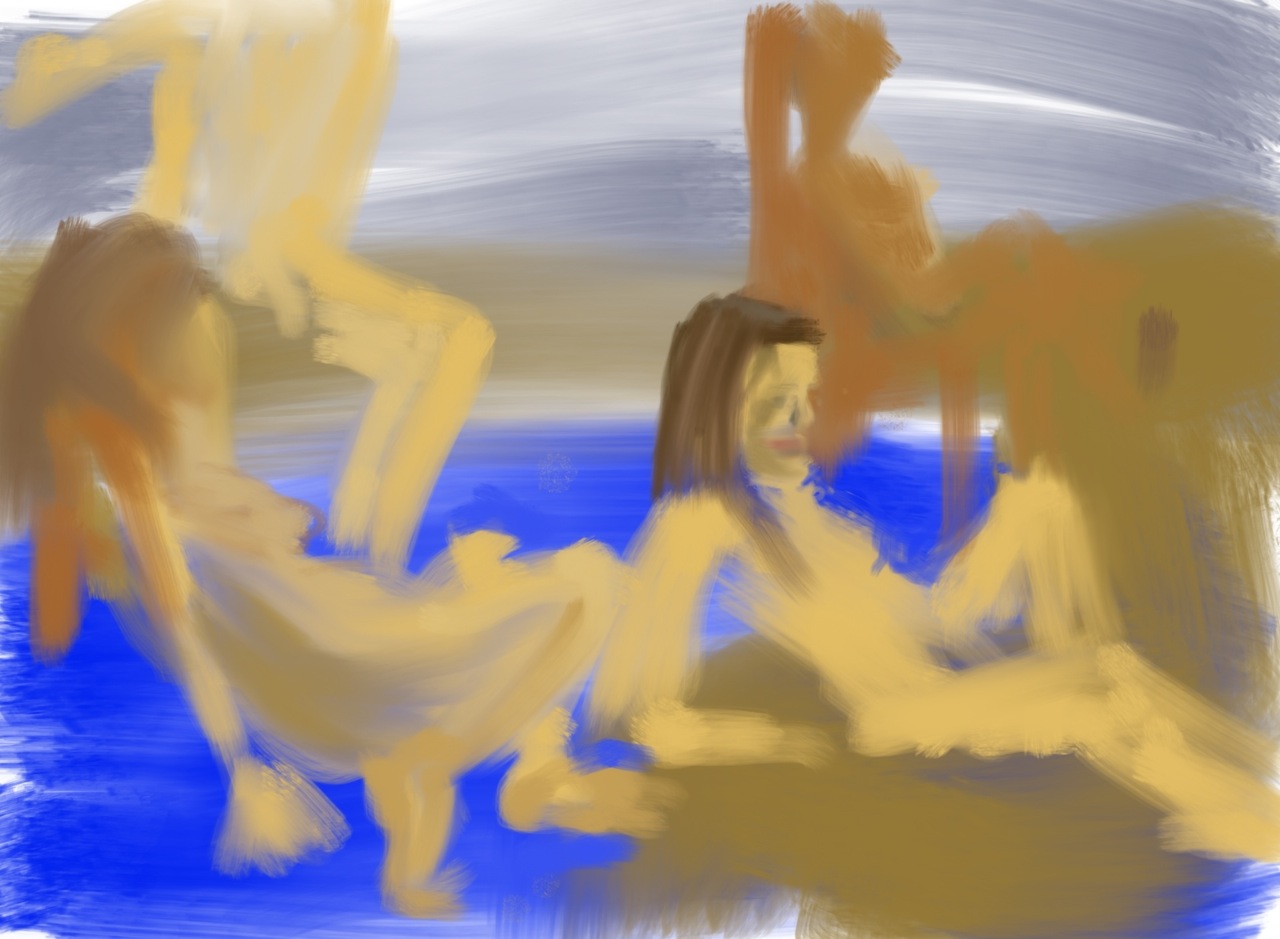
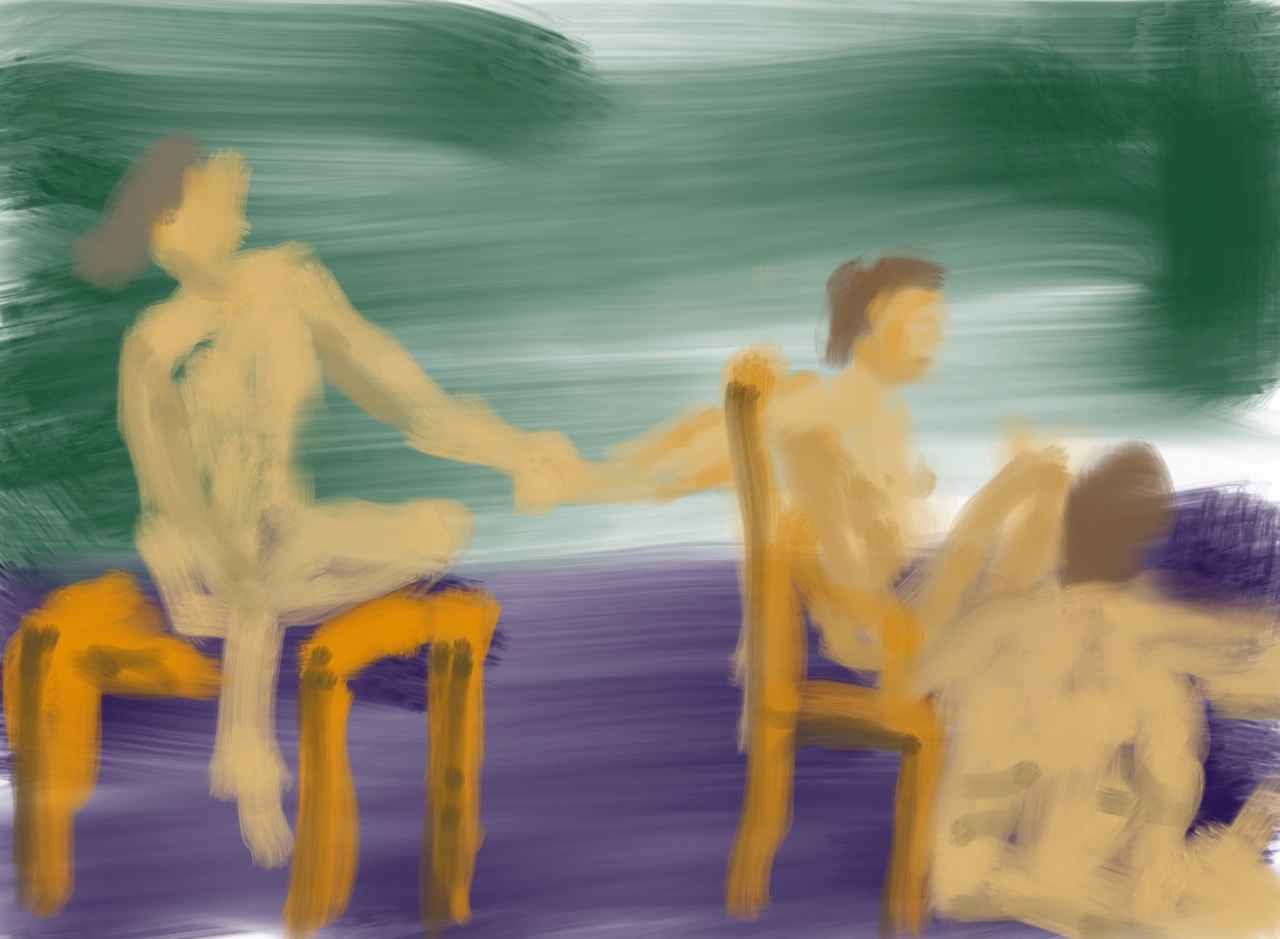
Here are some bold, colourful images created on an i-pad at last week’s event by Rob Black

Thank you Rob, we really appreciate your work, it’s great to share it. Lovely compositions

Rob can be found on rob@lambentgallery.co.uk